Costs, Insurance

Melanie Marien shares her reflections on caregiver burden, care integration, and the hidden labor of navigating serious illness based on her own experiences - both as a clinician and as a caregiver for her mom.
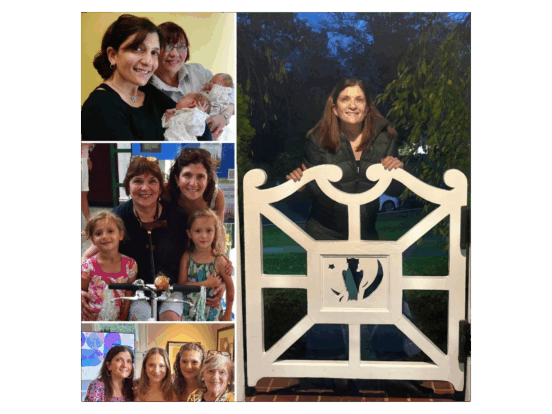
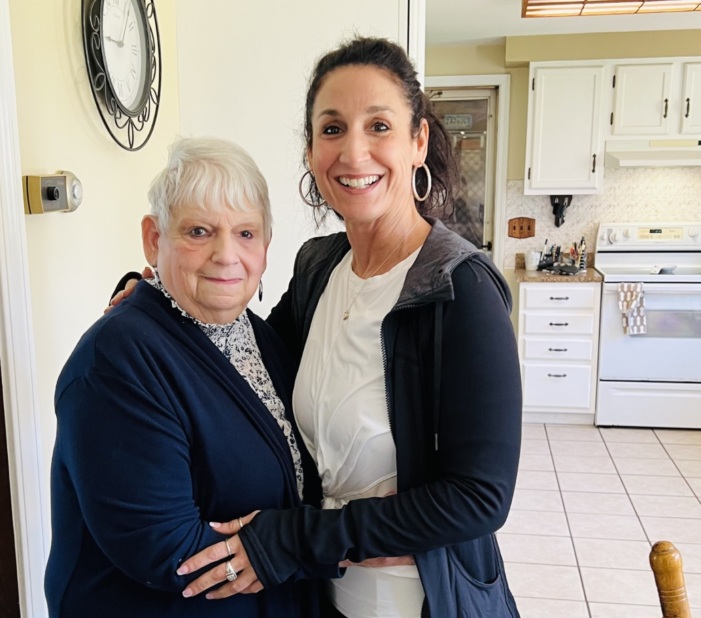
Melanie Marien (pictured above with her mom) is a clinician and patient advocate with 25+ years of experience spanning clinical practice, serious illness care, and large-scale healthcare transformation. In this blog post, she writes about where and how our healthcare system falls short.
***
A Spanish proverb says the bull looks different from the arena. In 2020, I left the stands. I went from clinician to caregiver, from participant in the system to witness it. What I once understood as process revealed itself as experience. I had to face the bull.
I have spent my career inside medicine — rooms where decisions are made, charts where lives are translated into numbers, meetings where quality is defined in percentages and thresholds. I have worked across the continuum: hospitals, clinics, rehabilitation, hospice. I understand how care is measured, documented, and evaluated.
I believed that knowledge would protect my family.
When my mother was diagnosed with triple-positive metastatic breast cancer, I assumed experience would translate into navigation. That familiarity would soften complexity. That knowing the language of medicine would prevent us from being lost inside it.
It did not.
Serious illness does not arrive as a single event. It arrives as a cascade of instructions. Calls to return. Portals to access. Appointments that must occur before other appointments can be scheduled. A choreography of logistics layered on top of existential shock.
An imaging center called with abnormal findings. She was alone. Her primary care physician received the report separately. She was told to schedule a surgical consultation. Before that, staging scans. At the surgical visit: not operable. Bone involvement. Next steps multiplied — bone biopsy, oncology, cardiac baseline, port placement, chemotherapy.
Each step was appropriate.
Each step required coordination no one owned.
My parents heard only the word metastatic. The system continued speaking logistics, I was processing my mother’s mortality.
Modern healthcare excels at specialization. Expertise is precise, disciplined, essential. Surgeons determine operability. Oncologists manage treatment. Cardiologists monitor toxicity. Radiologists interpret imaging. Palliative clinicians manage symptoms. Every role matters.
But specialization distributes responsibility. It does not integrate it.
Being a clinician gave me language. It did not remove the work. It made visible how much work is hidden.
The work of integration becomes ambient — invisible until it fails. It lives in phone calls, message threads, calendars, medication lists rewritten at kitchen tables. It lives in caregivers holding fragments and attempting to assemble continuity from documentation that was never designed to tell a whole story.
When chemotherapy injured her heart and her ejection fraction fell to 25 percent, a new specialty entered. New diagnostics. New urgency. Access required persistence. In our case, professional relationships shortened timelines. That advantage did not reduce burden; it clarified inequity.
Illness did not simplify her life. It multiplied its variables. Hypertension persisted. Diabetes destabilized under steroids. Depression deepened under fatigue. Immobility triggered gout. The body does not compartmentalize simply because healthcare does.
Her primary care physician was attentive, generous, even seeing her at home. Effort was not the problem. Architecture was.
Electronic records documented events but did not ensure shared understanding. Alerts transmitted data without context. Nuance required retelling. Continuity required memory — ours.
I knew when to ask harder questions. When symptoms diverged from imaging. When tumor markers rose despite treatment. When pain signaled something unresolved. Clinical knowledge became both tool and weight, positioning me between system logic and my mother’s experience of it.
She did not want to disappoint her physicians. Many patients do not. Gratitude silences escalation. Suffering becomes polite.
Hospitalization revealed the same pattern. Stories restarted at every shift change. Comfort was assessed in stillness, not movement. She was described as stable because she was quiet. What was missed was that silence can be pain.
I asked a physician to watch her attempt to sit up. Observation replaced assumption. Discharge plans changed, medications adjusted. The difference was not competence. It was perspective — someone holding the whole moment rather than a metric within it.
No one was careless. No one was indifferent. The system functioned as designed.
That is precisely the problem.
At home, hospice brought compassion, expertise, and relief — but not constancy. The hours between visits were ours. Care required strength, vigilance, interpretation. Families become clinicians by necessity, learning delirium before they learn how to sleep through it, learning medication titration while grieving in real time.
We built schedules. Rearranged work. Measured time in doses and repositioning intervals. Respite care was not convenience; it was infrastructure without which home would not have been possible.
Aging in place is often described as preference. In practice, it is capacity.
Capacity is physical, cognitive, emotional, financial, relational. It is the ability to coordinate across systems that were never designed to feel singular to the person experiencing them. It requires confidence to question.
There were moments untouched by logistics. Grandchildren visiting. Meals that felt ordinary. Christmas in July so she could see her ceramic village one last time — small houses glowing beside a hospital bed. Objects can hold meaning medicine cannot measure.
Those moments required planning, energy, and time. Tenderness is labor.
In her final week, the limits of home became visible. Symptoms accelerated. Safety narrowed. Transitioning to inpatient hospice was not failure. It was recognition — that care intensity had surpassed caregiver capacity. She told us she was tired. The body often speaks with clarity systems cannot.
My father was beside her when she died.
The clinicians were compassionate. The care was thoughtful. Nothing that happened was unusual.
That is what lingers. The system functioned as designed.
Healthcare defines quality through what can be counted: readmissions, complications, mortality, timeliness. These indicators matter. They protect patients from measurable harm.
But integration remains unmeasured. So, the labor required to create it is unresourced.
We do not measure the hours families spend coordinating across specialties. We do not measure the cognitive load of managing portals, instructions, and uncertainty. We do not measure escalation — the quiet advocacy that prevents deterioration. We do not measure the expertise families acquire without training or compensation.
From the bedside, quality feels different.
Quality is continuity someone is responsible for.
Quality is interpretation.
Quality is the reduction of friction during the most vulnerable period of a life.
Caregiving is not ancillary to serious illness care. It is a clinical function performed outside clinical structures.
Navigation is not administrative. It is safety work.
If healthcare continues to rely on families to integrate what systems fragment, then equity will remain aspirational. Outcomes will reflect not only disease biology but caregiver capacity. The ability to age-in-place and remain at home at the end of life will depend less on preference than on infrastructure that currently exists unevenly and often privately.
Policy discussions frequently focus on treatments, costs, and workforce shortages. These are essential. But serious illness care requires an additional shift: recognizing integration as a deliverable, not an assumption.
That means funded navigation. Longitudinal care coordination that follows patients across settings. Measurement frameworks that account for caregiver burden. Payment models that recognize time spent aligning care as clinically meaningful work.
It means assigning responsibility for the whole.
Because illness is experienced as a single story, even when healthcare is delivered in chapters.
Being a clinician gave me language. It did not remove the work. It made visible how much work is hidden.
Until integration is treated as infrastructure — designed, resourced, and expected — families will continue to build continuity themselves, quietly, imperfectly, and at great cost.
The system will function.
And patients will still feel alone inside it.
***